
"I am the good shepherd. The good shepherd lays down his life for the sheep." (John 10: 11) is one of the most powerful statements of Christ’s teaching. In Syriac culture, shepherding is understood in the same spirit — not as a rank or a privilege, but as a responsibility carried through love, service and self-sacrifice. The "Good Shepherd" is not merely one who leads; he is a devoted guide who feels the community’s pain in his own heart, who knows each of them by name, who takes their wounds upon himself, and who is willing, when it is asked of him, to spend himself for their good.
Amid political turmoil and social upheaval, I am someone who has learned — through lived experience — what it means to be a social balance in the spirit of the "Good Shepherd", and how difficult that truly is.
To be a steadfast balance amid the waves...
In a process forever swinging between being and not being, a process as sharp on both edges as a blade; to strive, with a conscientious sensitivity, to contribute to the existence and spiritual identity of the Church, embodied in Mor Gabriel Monastery and Deyrulzafaran Monastery...
In carrying this out, to resort at times to constructive satire in the spirit of the "Good Shepherd"; and at other times to live out that same spirit with fatherly responsibility, and where necessary with an autonomous will, turning it to the common good...
In Turabdin — particularly in Midyat — to attend personally to Christ’s elderly and frail brethren who have been left without anyone; to regard standing by them in their daily life and health needs as a duty, and to carry it out in a spirit of service...
To take ownership at whatever cost, to raise awareness, to show compassion, and to build bridges of understanding between the different segments of society...
When I think of the life embraced by my late father, Abuna Tuma (1938–2005), these are the qualities that come to mind, and it is with the truth that "everyone’s story is different; some people’s stories are heavy, wearying even to read" that I set out to write.
For throughout his forty years of spiritual shepherding, he met not tolerance but, for the most part, contempt. And yet he never lost his store of pithy, witty sayings. The insight gained from having observed life closely, from having truly grasped people and events, lent his speech both wisdom and refinement. Depending on the moment, he would express himself most effectively through a proverb that made one think, a quip that brought a smile, or a short but meaningful sentence that touched the heart.
His quick-wittedness came not from speaking without thought, but from deep experience, from the suffering he had lived through, from a strong memory, and from a gift for reading people correctly. That is why his answers were rarely mere replies; they were, more often, a lesson distilled from life itself, a wisdom refined through the years. In his hands, words were never a means of display, but a bridge reaching hearts. He spoke little, and to the point; every sentence he formed echoed not only in minds but in consciences. To talk with him was not simply to listen to a man; it was to listen to the voice of life, of wisdom, and of human experience.
To his mind, spiritual maturity found its meaning not in worship alone, but in an outlook that embraced life as a whole. In this sense, true spirituality is also a way of being civilised; it requires the education not only of the mind but of the conscience. For a spirituality that has not matured through the education of conscience is like a force that has lost its direction.
This is why true spirituality, rather than dividing life, approaches people, society and difference not with a separating eye but with a whole one. As with the image of the vine and the branch, a person does not see himself as apart from life; he lives with the understanding that society, and all of existence, are bound together by ties both visible and invisible. My father, who strove to live this out in practice, held to an outlook that drew people together rather than setting them apart; he believed that justice, mercy, mutual goodwill and brotherhood could rise only upon this awareness.
For this reason, he would often remind us: "There will always be thorns on the paths we walk. If there is no thorn in the spirit and mind of the one walking, the thorny paths are walked more easily."
And he did indeed walk those thorny paths with wisdom. His jokes, his reflexes, his reactions, his moods, his sorrows — even, at times, the tension and unease he lived through — all sprang from the sensitivity and the healing intent instilled in him by the "Good Shepherd" outlook. What guided his life was never the wish to build himself a comfortable existence, but the faithful discharge of his responsibility towards the flock entrusted to him by Christ.
And he carried that faithfulness’ heavy burden upon his heart to the very end of his life.
In November 1993, when he was forced to leave the village of Hassana, he first saw the widowed and elderly villagers who needed care safely to Midyat. When he himself, the very last to leave, turned to look back one final time, he was not parting only from stones and houses; he was leaving behind his childhood, his memories, the churches he had laboured for, and the spiritual inheritance handed down to him by his own father. He left his family home without ever tasting the fruit of the trees he had planted with his own hands. His heart could bear the weight of that moment no longer, and he suffered a heart attack right there. And though he underwent bypass surgery some years later because of it, he was in the end overcome by the illnesses that heart attack had set in motion, and departed from among us.
For after that heart attack, the burden he carried in his heart never eased. He bore the weight of his faithfulness to the Church and his people, patiently, to his last breath.
What he left behind was not merely a story of a life full of ups and downs, but a living example of faithfulness, devotion, and the wisdom of the "Good Shepherd." For, despite every hardship, he strove until his death both to live that wisdom and to pass it on.
In those turbulent and dangerous years of the past — a time when justice was trampled underfoot, human dignity was wounded, and violence stalked the land — he had taken as his guide the teaching, "Purge out the old leaven, that ye may be a new lump" (1 Corinthians 5:7). In his view, the true renewal of a person and a society depended on being cleansed of prejudice, of grudges, and of habits that set people apart. That is why, despite every setback, he never once relaxed his effort to draw out the goodness within people, to multiply the power of light rather than let darkness grow, to keep hope alive, and to build a new understanding.
And yet, when I try to make sense of that empathetic stance of his — his insistence, whether the moment called for it or not, on the importance of valuing labour in a place where labour was exploited — and of his devotion, I find myself, at times, unable to help questioning it.
Simply for being a priest, he was subjected more than once in the region to stoning and lynching attempts. Why, then, did he not choose to build a new and safer life in Europe?
Though he was forced to leave Hassana, the village where he grew up and which he loved dearly, why did he choose instead to persevere in Midyat amid material hardship?
While other priests, to save their own lives, were willing even to risk excommunication and turn their backs on Turabdin, why did he never once consider turning his position to personal advantage and emigrating — even at the cost of leaving his three children in the shadow of the fear of death?
Believing with all his heart in the wisdom that "you cannot sew cloth with a rusty needle," why did he choose, in a region whose social fabric had been torn apart, to write a new chapter of devotion and take up a new burden?
At a time when the local hardships and upheavals surrounding his life grew heavier still, why did he place the bond of the spirit above the bond of blood, choosing to stay and build a new life in Midyat rather than emigrate to Europe?
In that knife-edge period, why did he choose to shield Mor Gabriel Monastery with his own ailing heart, like a lightning rod, against the covert provocations and intrigues bent on weakening, wearing down, even undermining it?
At a time ruled by deep mistrust, when the idea of emptying the ancient land of Turabdin through mass emigration had come to a head, why did he stand against it?
Why did he throw himself, with all his strength, into the struggle to support and strengthen the Church?
Why did he choose to remain in the homeland, to strengthen its roots, and to take on the responsibility of preventing further dispersal?
Why could he never bring himself to accept the sale and loss of those beautiful stone houses that gave Midyat’s historic fabric its aesthetic identity and spirit?
Why did he protest, why did he raise a conscientious objection steeped in reproach, against those Midyat Syriacs who abandoned their ancient homeland, left Midyat without an owner, and sold their houses?
At a time when sorrow weighed heaviest, when a Syriac priest living in Europe said to him, "What are you doing in Turabdin? Why don’t you come? In the end you’ll get both your children killed there," why did he answer, "Even if I can do nothing else, I am praying for the souls of your father and your dead in the village cemetery"?
What were the true motives behind that answer?
While many people — his close relatives above all — put his staying in Midyat down to material self-interest, why did he leave his two children this one instruction as their inheritance: "Be slaves in your homeland; do not dream of being kings in Europe"?
Why, even at the cost of making his own children live through everything he himself had paid for the Church’s sake, could he not bring himself to accept them building a more comfortable life in Europe?
Why did he always place justice, brotherhood, mutual respect, conscience and truth at the centre of what he said?
Why did he so often insist that nothing could be built on corrupt and tainted thinking?
The answers to these questions may not seem easy at first glance. For those who measure life by material standards alone, these choices may carry a different meaning. But seen through the eye of the heart — through devotion to one’s land, historical consciousness, and the responsibility of being both church and people — one comes to see, behind this stance, an altogether different attitude, one that placed spiritual identity and values above all else.
For my father was a man of the cloth who strove to preserve balance amid political and social upheaval; who united his faithfulness to homeland and Church with the "Good Shepherd" outlook; and who served the elderly and those in need of care. For him, true success was never a title or a position, but the lightening of another’s burden, the strengthening of hope, and making Christ’s love visible within life itself. For he believed that no healthy society and no lasting peace could ever be built upon outlooks founded on selfishness, exclusion, resentment, prejudice, lies, intrigue, self-interest, cunning and injustice — nor upon methods that endlessly reproduce the grievances of the past, that set people apart, and that corrode goodwill.
In his view, it was not rusty needles that would bind up the wounds of our ancient land, but a clean conscience, a sound morality, justice, sincerity, mutual goodwill, and a new leaven capable of drawing people together. For a rusty needle neither sews cloth neatly nor leaves it whole; it wears the fabric down, weakens it, and does it further harm. This is why he so often said: "A social fabric cannot be mended, nor a society healed, by tainted methods."
In time, I came to understand that these attitudes of my father’s were not simply choices arising from his personal character. What truly shaped his life was the understanding of service that Christ entrusted to His Church. To be a good shepherd, then, requires grasping the very essence of that understanding of service.
When I measure Abuna Tuma against the standards of truth, I see that it was, above all, a Christ-conscious mind that echoed through his life. He strove to strengthen the brothers and sisters entrusted to him by Christ not through his own power, but by living out Christ’s love and mercy — even when, at times, this was misunderstood, he still strove to fulfil what that responsibility required. For he believed that every service undertaken within the Church must be carried out in humility, and must aim to draw people closer to Christ.
Had my father not held this sense of responsibility, my siblings, my children and I would in all likelihood be living today, more comfortably, in the diaspora. And the long journey of service that began for our family in the 1980s and 1990s would, in all likelihood, have been cut short.
For I, inheriting the spirit of devotion passed down from my father, have served Syriac culture for more than thirty-five years now. This journey, though it has often unfolded in narrow and difficult circumstances, has continued throughout, drawing inspiration from the words "Quench not the Spirit" (1 Thessalonians 5:19), and holding fast to the principle of keeping hope alive amid despondency. Within local conditions, amid the waves, I strive — as far as I am able, within my own field — to preserve balance and to sustain the productivity needed to develop our cultural heritage, nourishing the roots of our spirit. In civil society work, meanwhile, I have taken as my motto "bridges, not walls." For one of the things that helps a person mature is building healthy relationships with society and keeping them alive; forging bonds of trust between different groups, and nurturing them, is an inseparable part of a person’s journey towards fulfilment. Bridges, then, are not merely structures that connect people; they are also spiritual acts of service that strengthen mutual understanding and a shared culture of life.
At a time when our historic homeland had been left bereft of its own children, I made it through the hardships and trials of that period to arrive at where I am today. Despite every tempting offer and every insistent invitation from Church and community, I chose — with clear intent, following in my father’s footsteps — not to emigrate to Europe, but to remain in the homeland.
For some values cannot flourish through love from afar; some legacies cannot be safeguarded from a distance — they require being loved up close. With this awareness, seeing some of the intellectual seeds I planted thirty years ago now ripening and bearing fruit is, to me, a meaningful sign of the value of continuity. And seeing the whole community benefit from that fruit is a joy all of its own. For having been able to stay the course, and to sustain this effort, I give thanks to the divine grace that grants strength and wisdom to us, the weak.
As the "Good Shepherd’s" understanding of service comes to be more deeply grasped, I believe this devotion, too, will come to be more rightly understood within the measures of conscience and truth. For the means we possess have not been entrusted to us for our personal safety and comfort alone, but so that goodness may multiply, that good works may grow stronger, and that benefit may be produced for others. As Saint Paul counsels, we are to be "rich in good works, ready to distribute, willing to communicate" (1 Timothy 6:18).
This teaching reveals the true meaning of authority within the Church. Authority in the Church is not superiority or privilege; it is a sacred trust, born of divine grace and of the call to serve in love. Every office and every responsibility within the Church — including its positions, institutions, boards, commissions and administrative bodies — gains its true meaning only to the extent that it draws people closer to Christ and makes His love visible.
For the Church’s true strength does not come from its authority, but from placing love, justice and service at the centre of its governance. This is why the matter is not one of administration alone, but a spiritual matter, one that concerns conscience and morality. For when the Church bears burdens that are not properly its own, or loses the people’s trust through mistaken attitudes, it damages not only its institutional reputation, but Christ’s visibility in the world.
At this point, what is needed is attitudes continually renewed by the light of Christ; councils that discern with wisdom; hearts that unite justice with mercy; and an understanding of service that upholds human dignity.
For the Church’s true renewal begins not in stones but in hearts. Its mission is fulfilled not in changing buildings, but in the manner of its service and governance, and in its resemblance to Christ. Only then can the Church make Christ’s love visible, and build unity.
For my father, the "Good Shepherd" was never merely a metaphor; it was the daily, living embodiment of the call to service that Christ entrusted to Peter. The essence of this understanding is expressed in these words: "And when thou art converted, strengthen thy brethren." (Luke 22:32)
Yes, the whole matter is bound up in this saying: to serve life while preserving humility, without claiming superiority; to heed the voice of conscience while upholding one’s moral stance, without submitting to domination. In doing so, a person must first know himself, and only then fulfil, with love, mercy and faithfulness, his responsibility to strengthen his brothers and sisters.
For the true worth of what is entrusted to us is measured not by how much we possess, but by how far we are able to turn what we possess into goodness and shared benefit.
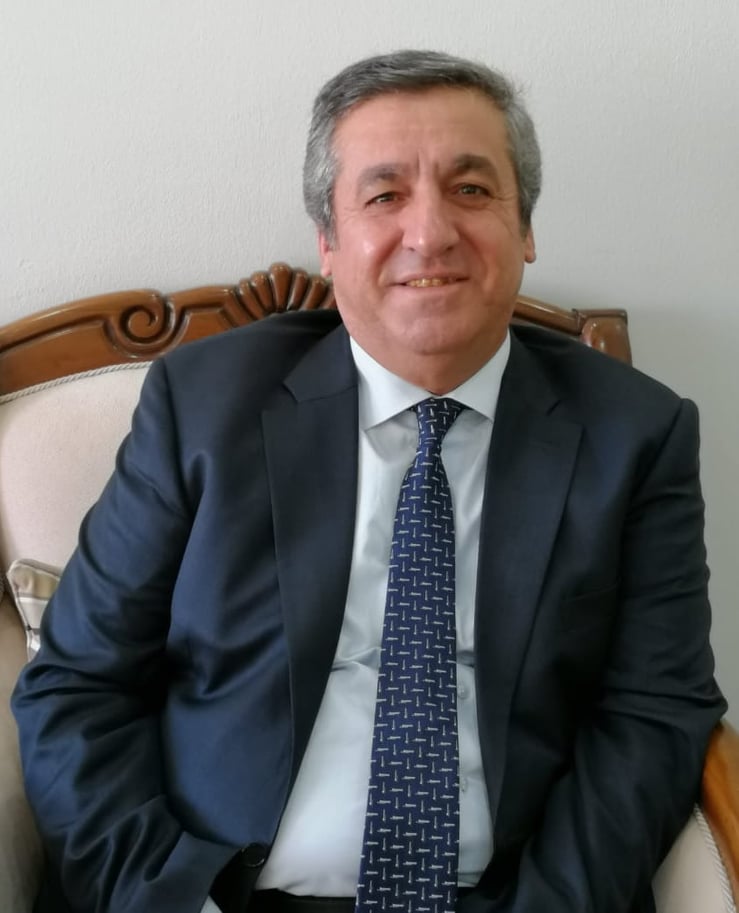
Yusuf Beğtaş[1]
Chairman of the Syriac Language, Culture and Literature Association / Mardin
[1]This piece is not a eulogy written by a son in praise of his father. Rather, it is the sincere expression of an educator and writer - one who moves through the depths of Syriac culture and seeks to draw meaning from it for the present - attempting to understand and give shape to the spirit and understanding of service that guided the life of an Abuna who chose, out of devotion, to remain steadfast in the homeland.
You can also send us an email to karyohliso@gmail.com


Leave a Comment