
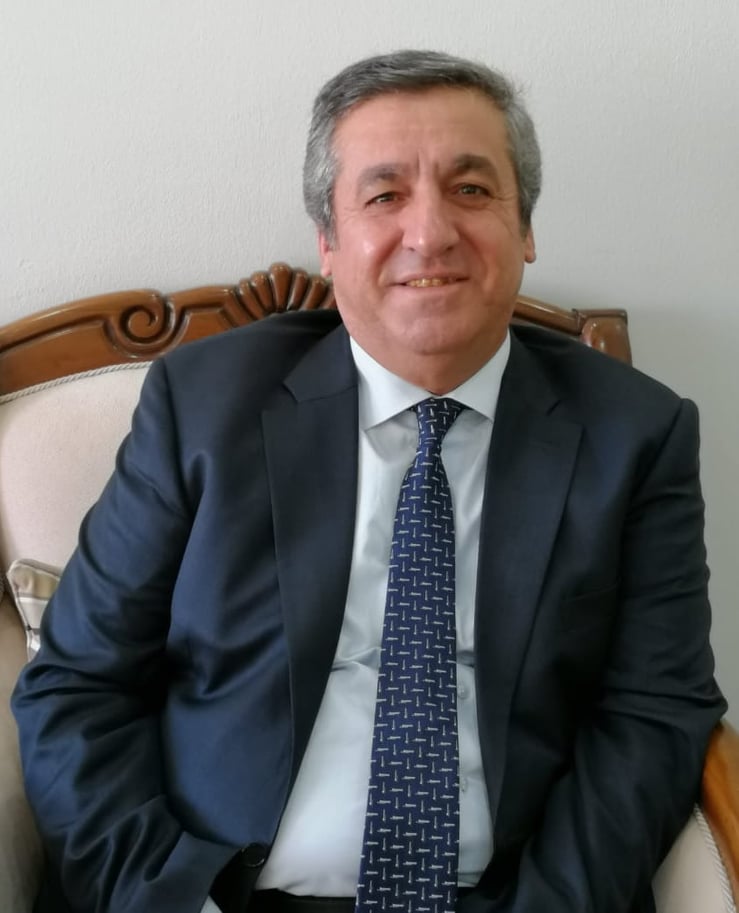
During the cultural journey we undertook to the Hakkâri region on 4–5 April 2026, alongside members of the Assyrian Youth Federation of Sweden, through the initiatives of our esteemed dentist, Mr Orhan De Basso—who has made a name for himself with innovative works in his field in Europe and has signed significant economic investments in Mardin-Midyat—we experienced joy and sorrow simultaneously. We rejoiced, we cheered up, we were deeply moved; and at times, we could not hold back our tears in the face of the painful traces left by the past. It felt as though we had not merely travelled across a geography, but had returned to the present day by passing through the turbulent corridors of history.
On a day when the snow and rain softly kissed those magnificent mountains of Hakkâri standing at salute to the sky, we visited the villages of Aşita, Halmon, and Geramun. We paid our respects to the labour and history left behind by our people upon those mountains. Each was like the silent sentinel of an old memory resisting time. The sincerity and richness of heart displayed by the villagers, moreover, were beyond praise.
We could not get enough of Aşita's enchanting nature; we filled not only our lungs but also our souls with a breath of fresh air. The murmur of waters filtering down from the mountains did us all good, like an invisible hand touching a place within us that had grown weary over the years.
We recited a silent prayer at the Church of Mart İşmuni in Halmon. In that silence, it felt as though prayers unsaid for years were rising to the heavens once more from between the stones. Yet, when we entered the abandoned, mysterious darkness of the Church of Mar Yuhanun Tayaya in Geramun with the flickering lights of our phones, an entirely different door, difficult to describe, opened within us.
Time seemed to have stood still inside that ancient sanctuary, which was partially destroyed, its walls weary, its stones wet, and rain dripping from its ceiling. In the midst of the dimness and silence, one hears the very beating of their own heart in a different manner. At that moment, a vast serenity, a profound longing, and an indescribable sorrow enveloped my interior.
Right at the end of the fifty-day fast, during the night of "Arrival at the Harbour" (ܘܰܥܕܶܗ ܕܰܠܡܺܐܢܳܐ)—which I felt deeply reflected the spiritual world of the group—I began to sing the hymn chanted on that occasion: "O Lord, O Lord, open to us Your door… ܡܳܪܰܢ ܡܳܪܰܢ ܦܬܰܚ ܠܰܢ ܬܰܪܥܳܟ"
The sound of the hymn blended with the sound of raindrops falling upon the stones. It felt as if we were not alone in that abandoned church; as if the souls of those who had prayed, wept, waited, and hoped there before us were also with us. As each word struck the walls and echoed back, it touched places within us that we had silenced.
The all-encompassing nature of the atmosphere wrapped around my soul. It was as though a time hidden within the memory of the stones, the walls, the rain, and the darkness was finding its voice once more. This hymn, which serves as a reminder not to lose the key to paradise and life, left an indescribable hope inside a person, even though it was sung in a sorrowful and tearful tone of voice.
Perhaps some places are not merely seen; they are felt. And some hymns are not merely heard; they are sung so that they may echo inside a human being for years without falling silent.
When you hear it, perhaps you too will feel what we felt in the dim light of that dark church; you will feel the longing, the sorrow, and the hope in the deepest part of your heart. Should that be the case, I shall consider myself most fortunate.
I extend my heartfelt thanks to everyone who added value to this meaningful and moving journey with their labours and contributions.
Yusuf Beğtaş
You can also send us an email to karyohliso@gmail.com


Leave a Comment