
Entropy: The Silent Law of Dissolution
The universe is an order moving under the silent guidance of invisible laws. In physics, if a system is left to its own devices, it tends to lose its order and dissolve; this inevitable tendency towards dissolution is called "entropy". According to this law, any structure that is not maintained and laboured over degrades and collapses over time. Human beings are also bound to this universal law. They cannot step outside it. A person who neglects their inner world, failing to undertake their spiritual and mental maintenance, is doomed to exhaustion and a loss of meaning over time. Because everything left to its own devices scatters and turns into a "functional-less" state. This is the silent rhythm not only of matter, but of existence itself.
Syriac wisdom has developed an understanding based on discipline to build a dam against this inevitable dispersion within the flow of life, to turn this course into a positive direction, and even to develop it. This understanding is none other than Tukoso Sniko, which means the "System of Needs".
As is known, mutual need is essential in life. This principle, termed "interdependence" in social sciences, reminds us that no entity can sustain its existence entirely on its own. Everyone and everything is, in some way, in need of another. Christ's teaching that "you are different members of the same organism" profoundly reveals this reality of the Tukoso Sniko / System of Needs, which exists at the core of life. This principle becomes even clearer in the following words of Saint Paul: "For as in one body we have many members, and the members do not all have the same function, so we, though many, are one body in Christ, and individually members one of another." (Romans 12:4-5)
This expression demonstrates that a human being is not a self-sufficient entity on their own; on the contrary, they find their meaning only within the whole. Every individual is different, the duty of each is distinct, yet they all exist within the same life, bound to one another with a complementary understanding.
Precisely for this reason, Tukoso Sniko / System of Needs is not merely an arrangement of requirements, but a law of unity and interdependence embedded in the essence of existence. To the extent that a human being comprehends this wholeness, they position themselves correctly. They neither absolutize themselves nor disregard themselves. On the contrary, by knowing their own place, they become a being that gains meaning alongside others.
Human Beings: The Balance Between Bread and Word
In Syriac spirituality, a human being is not merely a biological entity, but a spiritual being nourished by the divine word. A human being cannot live by physical needs (bread and matter) alone. The true source of life is the Meltho (word/logos), that is, the spirit coming from God. Without this truth and meaning, a human being remains incomplete and loses their balance. Christ’s words, "Man shall not live by bread alone, but by every word that comes from the mouth of God," (Matthew 4:4) are the summary of this balance.
For the continuity of life, a human being stands in need of both physical requirements (like bread) and spiritual values (like the word) simultaneously. When these needs are not met, that highly undesired process of dissolution begins. Yet, when the understanding of Tukoso Sniko is blended with Folhutho / Worship and Tavditho / Thanksgiving, the conflict of body-mind and spirit that drives the human being into chaos gives way to a reconciliation. Duality turns into unity. This order in the inner world ensures that life in the outer world flows in a healthy and balanced manner.
Avoiding undesired negative situations depends on comprehending these three concepts in Syriac (tukoso sniko, folhutho, and tavditho) in a correct and profound manner, absorbing them semantically, and ensuring they gain priority in practice within human mindset and applications.
Folhutho: Worship Shaped by Labour
Folhutho, which means worship in Syriac, is to live according to divine commandments and to display an unshakeable consistency on this path. Derived from the root flah (ܦܠܰܚ), which carries meanings such as "to work, to cultivate, to operate, to produce, to labour, to serve, to sculpt, to obey, to practice, to train, to keep warm, to motivate, to impel, to educate oneself, to put into practice, to move, to add motion, to plough and cleave the earth," this concept inherently contains the idea of reaching a "good result" in both a material and spiritual sense, namely attaining prosperity and salvation.
These meanings that form the origin of the concept of Folhutho (ܦܳܠܚܽܘܼܬܳܐ) may appear close to one another in nuance, yet they contain important differences at the level of depth. This distinction possesses a remarkable subtlety, particularly from the perspectives of language, philosophy, and theology. Consequently, each of the said layers of meaning contains a value judgement in its own right. That value judgement, shaped by conscious labour and conscious intention, expresses a field of sincere intention and conduct that carries continuity and is directed towards a permanent purpose.
Believing it will contribute to a clearer and more powerful understanding of the meaning, I deem it appropriate to explain this framework through a few Syriac idioms and usage examples, as follows;
The depth of the concept ܦܠܺܝܼܚܳܐ (Fliho) expresses that which has been cultivated, laboured over, and transformed. This meaning, materialising in different examples, reveals a profound truth regarding the inner world of the human being:
These examples point to a common principle concerning human life, namely "productivity and meaning", and they emerge not purely on their own, but through a process of being cultivated and directed. Just as land cannot yield crops without being cultivated, and marble cannot achieve an aesthetic form without being sculpted, a human being cannot attain maturity without cultivating their mind, tongue, and inner world.
Therefore, a meaningful and authentic life is possible only by a person "not leaving their mind idle, but kneading and giving direction to it with consciousness". The mind must be sown, thought must be educated, character must be sculpted, and the tongue must be disciplined. Only through this process can a human being emerge from their raw state and reach a purposeful and productive existence.
Viewed from this perspective, it is no coincidence that meanings like "the cleaving of the earth" are hidden at the origin of worship in Syriac. Indeed, a human being’s attainment of truth often begins with a cleaving/breaking. Light does not seep inside before that hard shell within the person cracks. Syriac wisdom expresses that this state can be possible only through a continuous style of Folhutho (worship). However, this is not an external ostentation, but a human being's effort to break free from the bondage of their own carnal self. Fasting (savmoܨܘܡܐ ) is also one of the deepest expressions of this purification. Its purpose is not to suppress impulses, but to rearrange them according to the divine measure. The following question from the Gospel reveals the essence of this effort with shattering clarity: "For what will it profit a man if he gains the whole world and forfeits his soul?" (Matthew 16:26)
In Syriac wisdom, self-control and the discipline of the carnal self are a person’s orientation towards divine balance by smoothing away the excesses within themselves. This process gains speed and power through worship / folhutho because this is not an action merely on a ritual dimension, but a human being's effort to rearrange themselves according to God.
Only in this way can a person untie the bonds that captivate them from within, and purify themselves of their fears, desires, arrogance, and illusions. They orient themselves towards discovering who they are in Christ. This discovery is not a conclusion, but the first step of a continuous process of transformation.
Thus, by purifying themselves of the excesses that render them dependent on material things, a human being deepens in faith and approaches their authentic identity step by step. In short, in the Syriac tradition, fasting is accepted as a powerful spiritual path that integrates with folhutho, disciplining the carnal self to carry the human being towards internal freedom.
Tavditho: Religion Born of Thanks giving
Tavditho, which means thanksgiving in Syriac, is not merely saying thank you for what has been given, but recognizing the true source of that blessing. By its word origin, it means "to grow strong, to find grace, to receive compassion, to be loving" and "to confess the faith". This concept is directly connected to the words ydo (ܝܕܳܐ), meaning "to grow strong and receive compassion", and avdi (ܐܰܘܕܺܝ), meaning "to confess and acknowledge".
These words, having evolved into a composite structure, transformed into a new meaning and took on a new state in the form of the concept of tavditho (ܬܰܘܕܺܝܼܬܳܐ), coming to mean thanking with feelings of gratitude and openly expressing this thanksgiving.
Interestingly, tavditho also means "religion" in Syriac. From this, we understand that in Syriac terminology, religion is feeling gratitude for what is given, accepting the source (God), and sincerely confessing and acknowledging this. This signifies a motivation that keeps the human soul warm and active.
However, within the flow of life, human beings can sometimes forget this meaning and essence, falling into the heedlessness of claiming ownership over what has been given to them and assuming themselves to be the source. Yet, everything possessed has been given to the human being from the divine source: life, breath, intellect, faith, status, wealth, authority, power, talent, skill… All are graces and holy values entrusted to the human being. What is essential is not to claim ownership over these values, but to properly look after them, to protect them, and to keep them alive in accordance with their true purpose by developing them. Observing harmony in relationships established with life and using them wisely is fundamental. An opposite attitude would be to oppose God. Because He commands observing the common benefit and doing no harm to any entity, animate or inanimate.
The greatest delusion of a human being is to mistake this trust for their own property and to view themselves as the centre of existence. Drawing attention to this arrogance and heedlessness in the human being, the following warning by Saint Paul reveals this truth in an open and shattering manner: "What do you have that you did not receive? If then you received it, why do you boast as if you did not receive it?" (1 Corinthians 4:7)
This expression questions the feeling of superiority that a person attributes to themselves and reminds them that everything possessed is actually a "bestowed grace". At this point, a deeper truth encompassing the human being's journey of existence appears. Because the tendency towards dispersion (entropy) in which a person finds themselves is not merely a dissolution, but also a search for direction. In this search for direction, the ancient text gives meaning to the steps of the human being anew: "All the paths of the Lord are steadfast love and faithfulness." (Psalms 25:10)
This expression declares that existence is within a non-coincidental flow. No path opens merely to dispersion or merely to extinction. Within every path, there are two fundamental principles carrying it: Grace and Truth.
Grace is the compassion dimension of existence oriented towards the human being. Truth, on the other hand, is the divine order that puts existence in its proper place. In this order, no matter what situation they are in, a human being is not considered to be within a completely idle flow. On the contrary, even within everything that appears as dissolution, there is a meaning and a direction carrying them.
Precisely for this reason, folhutho (worship) is a human being's conscious participation in this divine flow. Tavditho (thanksgiving) is a person placing themselves at the centre of truth by recognizing the source of this flow. Tukoso Sniko (system of needs) is to understand that this arrangement operates through interdependence at both the human and universe level, and to contribute to this[1].[1]
Thus, entropy ceases to be merely a law of dispersion; it transforms into a gateway of awareness calling the human being to truth. And when a human being passes through this gateway, they comprehend this: even within dispersion, there is a divine order holding it together.
This is why religion, that is, Tavditho, is a human being removing themselves from that centre and putting truth in its place. A human being is not the master / owner of anything they possess, but merely a trustee. Looking after this trust and developing it is a person’s most fundamental obligation in life.
Conclusion: The Resistance of the Soul to Entropy
Human life is a search for balance fluctuating between two great tendencies. On one side is entropy, that is, the heavy gravity of dispersion, dissolution, and forgetting; on the other side are folhutho and tavditho, that is, the effort of gathering, infusing with meaning, and reconstructing.
The understanding of religion, namely tavditho (ܬܰܘܕܺܝܼܬܳܐ), which evokes all layers of meaning in Syriac and carries the meaning of "thanksgiving", is a powerful opportunity for transformation that awakens a human being from the sleep of heedlessness through the path of discipline and training.
Within this framework, in the deep world of meaning of the Syriac language, while folhutho (worship) is a discipline calling the human being to spiritual awakening, tavditho (thanksgiving) is the consciousness of gratitude towards everything that keeps the human being upright and alive. Together, these two elements become instrumental in the revival of meanings that have been extinguished within the human being, and ensure that the authentic, that is, spiritual identity does not remain hidden inside but overflows to shape existence. And only in this way does a human being truly complete their existence, emerging from being a passive entity to become a productive, fertile, and influential companion/individual.
In essence, worship begins with a human being remembering who they are and deepens with their realizing how far they have drifted from truth. It matures with their turning their direction towards the divine once more and sincerely giving thanks to Him.
Therefore, folhutho (worship) must be lived far from the applause of crowds and stripped of ostentation, but in a spiritually and heartily genuine manner. Only when a human being attains this discipline and comprehends this truth do they truly approach the authentic purpose of existence. For no matter what a human being does, they must do it with the consciousness of tavditho, that is, gratitude. When they realise everything they do with this awareness, they leave a lasting impact and experience its positive results/fruits by maturing over time.
Because in the Christian understanding, "being" precedes "doing". A human being does good works because they are good in their essence; they do not become a good person because they have done good works.
Thus, even though the law of the physical universe points to dispersion, the primary duty of a human being is to find a meaning for themselves within this dispersion. Folhutho is a human being's return to their essence, and Tavditho is noticing the light within that return.
It must not be forgotten that until this spiritual gathering process takes place within the human being, Tukoso Sniko (the system of needs) remains merely as a totality of deprivations where deficiencies are lined up one after another. And only when the soul rises to a governing position, catching harmony with the divine order along with the body, does a human being reach an unshakeable wholeness, receiving everything they need from its authentic source.
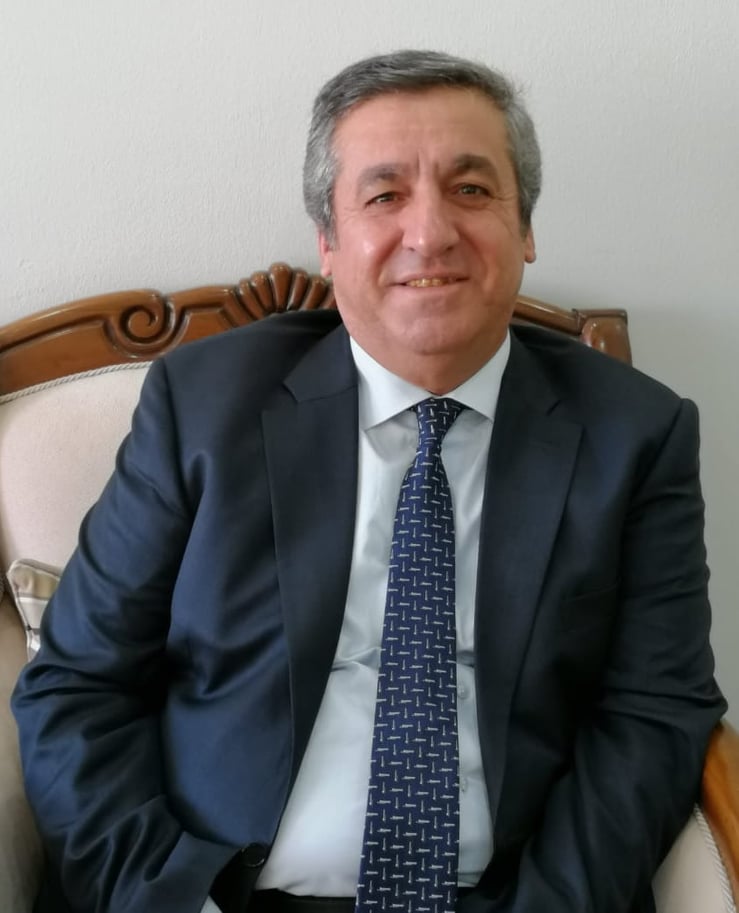
Yusuf Beğtaş
Syriac Language-Culture and Literature Association / Mardin
[1] Rituals in the Church carry the meaning of regulating dispersion and reforming what has been corrupted. Those who are curious about the deep spiritual dimensions of these rituals can click the link below to read my article titled ‘The Meaning and Importance of Spiritual Rituals in Syriac Culture’:
You can also send us an email to karyohliso@gmail.com


Leave a Comment