
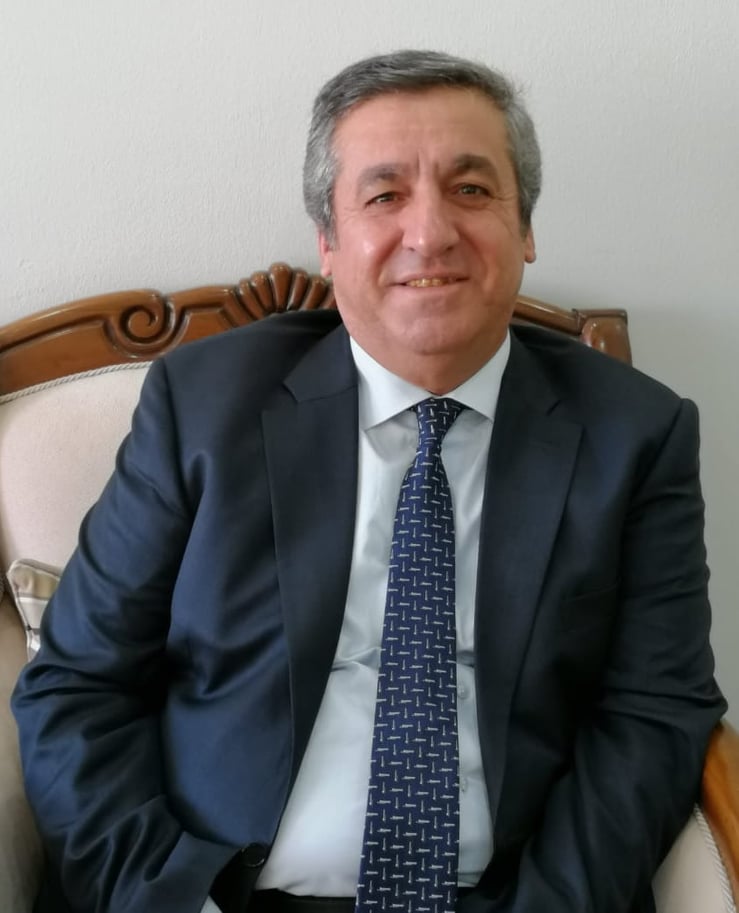
Language is one of the most significant elements that define and shape the identity of a society. It is through language that people express themselves, communicate, and transmit their cultural heritage to future generations. With the sense of belonging it creates, language strengthens the bond between communities and gathers individuals around shared values and goals.
Language reflects the history, values, beliefs, and lifestyles of societies. It also shapes the worldview and mode of thought of a community. Every language possesses its own unique logical structure, vocabulary, and mode of expression; this reveals how the society in which that language is spoken perceives the world. When a language vanishes, the knowledge, tradition, and cultural riches carried by that language vanish too. Therefore, the preservation of language is utterly vital and important in terms of a society’s ability to maintain its identity and cultural continuity.
A Mother Tongue is Not Merely a Tool for Communication
The meeting of the mother tongue with collective memory plays a critical role in the preservation and transmission of cultural and historical heritage. Because a mother tongue is not merely a tool for communication; it is simultaneously a treasure that stores and transmits the memory of a society, namely its past, experiences, traditions, and values. While collective memory encompasses the shared recollections, shared identity, and cultural bonds of a society, the mother tongue is the most fundamental vehicle in expressing and keeping this memory alive.
All languages recount the secret of humanity. However, a language that is not nourished by its own authentic source and its own authentic culture is doomed to perish. No society can sustain its existence with a way of thinking that does not belong to it and does not emerge from its own authentic culture. Social peace and communal tranquility will gain meaning only when every society can develop a universal thought based on mutual interaction yet springing from its own authentic culture. This way of thinking should develop not as a form of contact that seeks to establish its own dominance or suppress others, but on the contrary, as one that serves social justice, peace, equity, mutual transformation, and bringing into existence. For everything in the universe is just and beneficial as long as it supports the understanding and development of the meaning of life.
The Most Effective Power in the Transformation of Societies
On the other hand, language is sometimes perceived according to socio-political consciousness and capacity for understanding, and sometimes interpreted and evaluated as desired. This manner of perception and interpretation is directly proportional to what is approached and how, and what is understood and how, rather than the values carried by a language. However, sincere individuals or groups with high cultural awareness, who know the evolutionary process of languages, do not fall into the inconsistency of understanding and interpreting language in any way they please. They do not attempt this. On the contrary, they make an effort to comprehend and perceive what the fundamental and ultimate purpose in language is. They feed upon—and pay attention to this nourishment from—the progressive intellectual nutrients in the background that bring the language into being. Because from time immemorial, language, which forms the main artery of culture, has been the most effective power in the transformation of individuals and societies, and has functioned in this direction.
In human history, every language has a story. Yet the story of Syriac possesses three distinct fields unique to itself: the historical past of Syriac, its historical upheavals, and its own reality. Undoubtedly, a more objective narration of Syriac, which has added different meanings to the history of thought, and the comprehension of its importance depend on more research and examination being conducted into these three distinct fields.
It Was Widely Used Throughout the Middle East
It is historically known that Syriac, which is a continuation of Eastern Aramaic, developed its vocabulary by inheriting it from Akkadian-Assyrian. The alphabets of many other languages developed based on the initial and archaic period alphabet system of this language. Consequently, the relationship of Syriac with other Semitic languages such as Hebrew and Arabic stems from its sharing of this common linguistic treasury. Viewpoint from a philological perspective reveals that Akkadian is a very important bed for Syriac. It is observed that this language was a pioneering point of support in its relationship with Semitic language groups such as Syriac, Hebrew, and Arabic, and indeed with close and kindred languages.
Although Syriac is known to be a sister language to Hebrew and Arabic, it is certain that it influenced these languages deeply. Once widely used throughout the Middle East, Syriac was also used as one of the eighteen types of alphabet and writing systems utilized by the Turks throughout history.
Possesses a Respectable Place Within the Christian World
By virtue of being the language spoken by Christ, this language also possesses a respectable place within the Christian world. This language has three writing styles of similar character known as Estrangelo, Eastern (Madenḥāyā), and Western (Ma’arbāyā). Anyone who can read one of these writing styles can easily read the others as well. The dialectal variation observed in every language is present in Syriac too; it is divided into two dialects, as Eastern and Western. Among the public, the Eastern Syriac dialect is more commonly known by the name Chaldean or Assyrian, whereas the Western Syriac dialect is termed purely Syriac. If the sounds a and o pronounced at the end of words between the Eastern and Western dialects are ignored, it will be easily seen that there is no serious difference between these two dialects of Syriac.
Apart from the written and literary language, the Syriac language also possesses colloquial vernaculars. Although these vernaculars show a partially minor variation according to regional and local characteristics, they are divided in a fundamental sense into two main vernacular dialects within themselves. The colloquial tongue spoken by the Eastern Syriacs is called Assyrian or Surit; whereas the colloquial tongue spoken by the Western Syriacs is given the name Turoyo or Surayt. Syriacs living in the diaspora invariably use one of these two dialects in daily conversations.
It Harbours the Mystical Secrets of Mesopotamia
Syriac, which holds a unique place within the history of civilization, harbours the mystical secrets and the sorrow of Bethnahrin / Mesopotamia. With these characteristics, it is a matter of identity beyond a mother tongue for the Syriac communities living across the world. For Syriac is the carrier and heir of the organic culture born in ancient Bethnahrin (Mesopotamia). Even though its efficacy has been damaged, it embraces a contemporary voice spanning centuries. It is one of the ancient languages of the world, having emerged from the bosom of the East and become the official language of the Assyrian Empire[1].It is an ancient language that has played a role in the development of civilization.
Syriac is a history as long as the Tigris and Euphrates themselves, developing with the birth of the Church of Antioch in Christian history[2]. It is the language of the schools of Antioch, Nisibis, Edessa, G/Gondishapur, and Kenneshrin, which have left traces in the history of thought, philosophy, medicine, astrology, and many other disciplines. Although there are other factors in the social, theological, and cultural background, even the ritual language used in churches developed thanks to it, owing to the conceptual depth of Syriac. By the power of the creative concepts it possesses, it holds the privilege of being a language that developed and disseminated Christian teaching.
Syriac Sets Sail Towards an Infinite Ocean
In addition to this, Syriac is a language that made serious contributions to the development of Christianity through the significant inputs it offered to Eastern-Western thought. It is a language that played pioneering roles in the development of thought, philosophy, and spiritual consciousness, and in the Greek civilization reaching the Arabic world and continents such as Northern Africa and Europe. It is known for its expansionist character in the life of the region from a socio-cultural and artistic perspective. During the historical periods when it was active, it served as an important bridge in intercultural interaction. It contributed to Eastern-Western thought, and to the development of civilization, philosophy, and rational intellectualism. The breakthrough it opened in the world of thought reached as far as the Arabic world and Europe. Its role and influence in transmitting antiquity to the Islamic world are immense. It distinguished itself particularly with the significant contributions it offered to Arabic and Islamic philosophy. It contributed to the development of social thought through the rich heritage and spiritual awareness it offered to different fields of literature. As this reality comes to light today—through scientific studies—the historical importance of Syriac is further understood and gains much more value.
This language, which carries the past into the future, possesses by its nature unique concepts and habitats of meaning, alongside a vocabulary with rich and quite deep meanings. The origin of Syriac naming and meaning-making descends to the fertile sources of the ancient culture that flourished in ancient Mesopotamia. Whichever way we look at it, the alluring spectrum of meaning and capacity for meaning-making of Syriac reveals its own existence in all its stature. When the language used in research and examination is Syriac, it is then that a pleasant marathon of labour begins for a person. While swimming in the deep sea of thought of words and concepts, one simultaneously sets sail towards an infinite ocean.
It Is Like a Treasure Buried in the Soil
Of course, as in every language, when an effort is made towards 'understanding' and 'infusing meaning' in the Syriac language, reaching the 'root' meanings of concepts is not always as easy as it is assumed. Although there are admirable works carried out by linguists on Syriac for the past few centuries, my conviction is that the secrets hidden in the depth of this ancient language have not yet been brought to light as they ought to be. It is just like a treasure buried in the soil. Should it come to light, that very different 'system of meaning and productive spirit' regarding life itself within the ancient cradle of wisdom of Mesopotamia will dazzle our eyes with its colourful pageant.
Because throughout history, Syriac has been the meeting point of many cultures, playing an important role in the preservation and transmission of cultural heritage. This language continues to be the principal element in preserving the identity of Syriac communities and transmitting it to future generations.
Syriac is Both a Source Language and a Mother Tongue
There is a difference between the concepts of 'mother tongue' and 'source language'. These two concepts, carrying different meanings, sometimes cause semantic confusion and perplexity.
The word 'main/source' in the concept of 'source language' does not mean 'mother', but is used in the sense of fundamental, primary, source, bed, or essential. This definition is highly important in terms of showing the historical power of a language. A 'source language' means a source language that harbours other languages within it, carrying other or sub-languages and dialects within itself; it means the language that beds multiple languages, the language from which kindred languages have derived[3].
A mother tongue is the language acquired from the family, social environment, and the linguistic and cultural atmosphere one is within, without a conscious learning process, usually spoken at home, on the street, and in social settings. For this reason, the term 'mother tongue' is directly associated with the mother and means the language learned from the mother. This situation shows that the mother tongue is generally associated with a specific ethnic origin and cultural context.
According to linguists, the number of source languages that have served as a source for other languages is very few. Romance languages such as French and Italian, which are accepted as culture languages today, are branches of Latin. Therefore, Latin is a source language. Similarly, Syriac is a source language and a source-bed within universal culture. For Syriacs, however, this language is directly their mother tongue.
A Person Who Does Not Know Their Mother Tongue is an Orphan
The mother tongue is a person's origin; a person who does not know their mother tongue is an orphan. In this context, it is unthinkable for anyone on earth to be deprived of their mother tongue. No one can be denied the discipline of their mother tongue; everyone should be able to speak their own mother tongue freely, learn it, and develop it. For the mother tongue is as sacred as human dignity and the right to life.
Knowing or learning a language different from one's mother tongue is akin to wearing a new suit of clothes; a person can always wear a new suit of clothes. Yet the mother tongue is not like this; the mother tongue is like a person’s skin, and it is impossible to strip it off and put on a new one in its place. Nonetheless, multilingualism or knowing another language is a personal enrichment.
The mother tongue is a living source that infuses the human being with spirit along with the mother's milk. Confucius (551–479 BC) expresses this in the following manner: "To destroy a society, weapons are not necessary; it is enough to make it forget its language."
The Death of a Language Means the Extinction of the Heritage
The Syriac writer from Diyarbakır, Malfono Naum Faik (1868–1930), emphasizes the importance of the mother tongue with these words: "A person who does not know their mother tongue cannot know why they exist."
Therefore, the death of a language means the extinction of the people speaking that language and the heritage created with that language. Because language is not merely a tool for agreement between people, but simultaneously a vehicle that transmits knowledge and wisdom to the future, developing the relationship between the past and the future. Consequently, the vitality of the mother tongue is directly related to cultural awareness. As the Syriac-Maronite author Kahlil Gibran (1883–1931) said: "Sincerity makes all our deeds honourable and beautiful."
The survival and vitality of an ancient language like Syriac cannot be possible solely through the efforts of those who love and know it. In this process, social awareness, the will of civil society organisations, and an understanding of responsibility play a decisive role. For this effort to turn into a consistent and permanent understanding, the support of sensitive individuals, local governments, and relevant universities is of vital importance. This 'fidelity' is a great necessity for the continuity of Syriac.
One Must Exert Labour for the Future of Syriac
Syriac is like an antique adorning the necklace of civilization; it carries a great meaning as a main or source language in universal culture, and as the mother tongue for the Syriac people. Preserving and developing it depends on a sincere awareness and consistent efforts. Under contemporary conditions, there is a need for this awareness and these efforts more than ever before.
Just as a goldsmith knows the value of an antique, only those who know the language deeply and comprehend its richness understand the value of a language. Syriac authorities must exert more labour and display more effort for the future of Syriac, which is under threat. At the very least, they should reflect and ponder upon this matter; because if one ponders, the processes of understanding, developing, and learning begin.
Let it not be forgotten! Syriac is an artery beating in the heart of history; nourishing it will mean giving life anew to a story that is on the verge of being forgotten.
Yusuf Beğtaş
[1] During the period of King Sennacherib (705–681 BC), who reigned upon the throne of the Assyrian Empire, the Syriac/Aramaic language became the most widespread and influential language across the vast territories of the empire. During this period, King Sennacherib used this language as the official language in his correspondence with world leaders outside the borders of the empire. King Sennacherib’s advisor, Ahiqar the Wise, penned a book titled 'The Wisdom of Ahiqar' in the Syriac alphabet. Fortunately, a copy of this book dating back to the 5th century BC has survived to the present day. 'The Wisdom of Ahiqar' is considered one of the oldest surviving works among world literature.
[2] The Syriac Orthodox Church, the Syriac Catholic Church, and the Maronite Church use the western dialect of Syriac—alongside the local language—in daily prayers and liturgical services; whereas the Assyrian Church of the East, the Chaldean Church, and the Ancient Church of the East use the eastern dialect of Syriac. The Melkite Church (Greek Orthodox and Catholic), on the other hand, completely severed its organic bond with Syriac after the 7th century and turned towards Arabic.
[3] A source language (anadil) means a language that is the origin of many languages, giving birth to many languages. In another expression, a source language means a language from which other languages have been derived. A source language means a language that has acted as a mother. This feature in language enters the field of study of linguists. A mother tongue (anadili), however, is the language a person learns from their mother, those at home, and the community to which they belong by lineage. For this reason, mother tongue and source language should not be confused with each other, and care should be taken both when writing and speaking. It is not required for any mother tongue to be a source language, in other words, to have served as a source for the derivation of another language. When saying mother tongue, it is understood that the language used is the language the user learned from their mother. The letter “i” at the end of this homonymous word creates significant differences in meaning.
You can also send us an email to karyohliso@gmail.com


Leave a Comment